Braid Styles in Great Mills: Choose the Right Look + Care
By Luxury African Hair Braiding Salon | September 14, 2026
I hear this a lot: you want a protective style that looks beautiful and still holds up weeks later, and you want to feel good walking out the door. Braid styles include quick protective options like box and knotless braids, traditional cornrows and feed-in techniques, plus faux locs and braided updos. I’ll help you pick based on hair density, how long you want the style to last, your daily activities (swimming, shift work), and how much upkeep you can realistically do each week in our Mid-Atlantic humidity.
If you’re looking for hair braiding around Great Mills, you’re probably trying to solve a real problem fast: a style that lasts, doesn’t feel too tight, and still looks neat after work, school, or a weekend on the water. I’m located in the Great Mills, MD area along the Point Lookout Road corridor near the center of the community and local commercial strip, so it’s an easy stop for a lot of people coming from Lexington Park, California, St. Inigoes, Park Hall, Leonardtown, and Valley Lee.
Why people book african hair braiding when life is busy
Most people don’t come in looking for “just braids.” They come in because they’re tired of daily styling, they want to protect their natural hair, or they need a look that stays put through long shifts and unpredictable schedules. If you work nights, you don’t have time for an hour of detangling every morning. If you’re around the water, you need braids that can handle boating or swimming without turning into a frizzy mess after day two.
That’s what I focus on in this hairdressing salon: choosing a braid pattern, size, and hair type that fits your real routine. Decorative styles are fun, but protective styles only protect when they’re installed with the right tension, clean parts, and a plan for scalp care.
Quick filter: Want the fastest styling in the morning? Think cornrows or feed-in cornrows. Want longer wear with lots of styling options? Think box braids, knotless braids, or micro braids.
10 braid styles I do in Great Mills, plus who each one fits
I do african hair braiding that ranges from simple, clean cornrows to detailed pattern work and long-length installs. Here’s how I think about each option when you’re deciding.
Jumbo Braids
Jumbo braids are big, bold, and usually faster to install than smaller sizes. They’re a solid protective option when you want impact without an all-day appointment.
Best for: You want a quick install and easy maintenance, and you’re okay with a shorter wear time than small braids.
Knotless Braids
Knotless braids start smoothly at the scalp and tend to feel lighter because there’s no bulky knot at the base. I like them for a natural fall and a more flexible feel at the roots.
Best for: You’re sensitive to tension or you want braids that move and lay naturally, especially in ponytails.
Feed-In Cornrows
Feed-in cornrows add extension hair gradually so the braid builds thickness without a heavy start. That’s how I get a clean, natural look with the option for patterns or longer length.
Best for: You want cornrows that look full but still natural, and you need a style that’s easy to wrap and go.
Fulani Braids
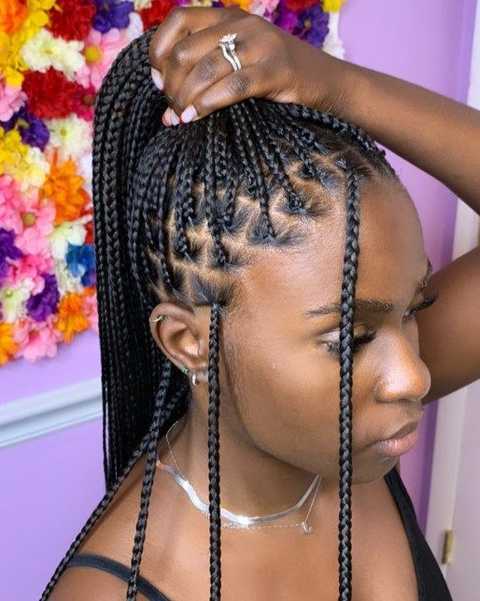
Fulani braids mix straight-back cornrows with free-hanging braids. If you like accessories, this is a great style for beads or rings without looking overdone.
Best for: You want a cultural, stylish look with detail in the front and movement in the length.
Box Braids
Box braids are the classic for a reason. The sections are neat, the style is versatile, and you can wear it down, up, or half-up without fighting your hair every morning.
Best for: You want a timeless protective style with lots of styling options and predictable wear time.
Tribal Braids
Tribal braids blend cornrows and loose braids with pattern work that stands out. This is where I spend extra time on clean parting so the design reads clearly.
Best for: You want a protective style that looks like a full look, even with simple outfits.
Goddess Braids
Goddess braids are larger braids styled close to the scalp for a polished look. They photograph beautifully and they’re easy to keep neat with a wrap.
Best for: You need something protective and put-together for events, work, or travel.
Halo Braid
A halo braid wraps like a crown. It’s a great choice when you want the hair off your face and neckline, especially in hot, humid summer weather.
Best for: Special occasions, formal photos, or days you want an elegant updo without fuss.
Lemonade Braids
Lemonade braids sweep to the side and keep the look bold and clean. If you want style without having hair falling forward all day, this is a favorite.
Best for: You love cornrows but you want a little edge and a side-swept shape.
Micro Braids
Micro braids are tiny and detailed. They take longer, but you get a lot of styling freedom, and updos tend to look extra smooth and full.
Best for: You want long wear and maximum styling options, and you’re okay investing the time up front.
A note on boho braids and locs: If you’re aiming for a more textured, boho look, tell me at booking so I can guide you toward the right braid size and finish. If you’re thinking about locs or locs extensions, I’ll tell you honestly if a braid style is a better fit for what you want right now.
“Exactly like the pic” matters, and that’s the standard I work to
A lot of people come to me after a bad experience somewhere else, or they’re trying to fix a style that didn’t come out the way they asked. I keep it simple. If you bring a picture, I’m going to look at the details with you: braid size, part shape, how full it is, and what your natural hair can comfortably support.
People also appreciate speed when it’s done right. I’ve had clients mention getting in and out, and still loving the finished hair. That balance is important around Great Mills, especially if you’re squeezing this in before or after shifts at NAS Patuxent River or handling a packed family schedule.
I came into shop last minute with a picture and no appointment. The lady’s welcomed me asked for a pic of style. My hair turned out beautiful and exactly like the pic.
one of our first-time visitors
And if something isn’t right, I want you to say it while you’re in the chair. I’d rather adjust parting, length, or fullness on the spot than have you go home trying to “make it work.”
How booking and braid sizing works (so timing isn’t a surprise)
When you sit down, the first thing I do is look at your hair density, your scalp, and your length. Then we match your inspo picture to a braid size that makes sense for your hair and your schedule. Small braids take longer. Detailed patterns take longer. Longer length takes longer. That’s normal.
A realistic way to think about time
- 2 braids or 2 cornrows braids styles: usually one of the quickest options, great when you need to be in and out.
- Cornrows and feed-in braids: timing depends on how many rows and how detailed the pattern is.
- Box braids and knotless braids: timing scales with size (jumbo vs small) and length.
- Micro braids: longest appointment time, best when you’re planning ahead.
If you’re a shift worker, let me know what window you actually have. I’ll steer you toward a style that fits your time, instead of pushing something that turns into an all-day sit.
Aftercare for Mid-Atlantic humidity, swimming, and busy weeks
Hot, humid summers in the Mid-Atlantic can make braids frizz faster, especially around the hairline and crown. Add boating, beach days, or pool time and you need a plan that doesn’t require daily rework.
My simple care rules
- Wrap your braids at night. A scarf or bonnet goes a long way for neat edges.
- Keep your scalp clean, especially if you sweat at work. Use a light scalp cleanser between full washes.
- If you swim, rinse as soon as you can and focus on drying the roots. Damp braids at the base can lead to odor and irritation.
- Don’t overload your braids with heavy product. A little goes far, and buildup makes braids look dull.
If you’re around the water a lot: cornrows and feed-in styles are usually the easiest to rinse and dry quickly. Long box braids and knotless braids can still work, but you’ll need more drying time at the roots.
Why I’m picky about tension: the “protective” part has to be real
Protective styling isn’t just about how it looks on day one. It’s also about how your scalp feels on day three, and what your take-down looks like weeks later. I pay attention to tension at the hairline and nape, because that’s where people feel tightness first.
I’ve been in Great Mills for 3 years, and a lot of my work comes from repeat clients and referrals. People come back because they like the atmosphere, they like that we’re clean and professional, and they like that we correct things when something isn’t right. If you’re comparing african hair braiding shops along the Great Mills, Point Lookout Road corridor, that consistency matters.
Want help choosing fast? When you reach out, tell me:
- The look you want (send a picture if you have one)
- Your ideal wear time (2 weeks, 4 weeks, 6+ weeks)
- Your schedule window (especially if you’re booking around night shift)
If you’re also looking for hair styling because you need a full look, tell me that too. I’ll point you to a braid style that gives you the finish you want without overcomplicating it.
FAQs about 2 braid hairstyle options, box braids, and swim-proof care
How long do different braid styles usually last?
It depends on size, your new growth speed, and how you care for your scalp. Cornrows and feed-in styles are often shorter wear. Box braids and knotless braids usually last longer, especially in medium sizes. Micro braids can last a long time, but they require careful upkeep to avoid tangling at the roots.
How much should I expect to pay for box braids or knotless braids in this area?
Pricing is mainly driven by braid size (jumbo vs small), length, and how much hair is needed for fullness. The best way to get an accurate number is to share the style photo and tell me the length and size you want, and I’ll quote you based on that.
Can I go swimming with braids and how do I protect them?
Yes, you can swim with braids. Rinse your hair as soon as possible afterward, then focus on drying the roots thoroughly. Keeping the scalp clean and avoiding heavy product buildup helps your braids stay fresh in humid weather and after pool or beach days.
What’s the difference between knotless braids and traditional box braids?
Box braids are created using knots at the base to secure the extensions, while knotless braids start seamlessly from the scalp, offering a lighter, more natural look with less tension on the hair.
How long does a braid appointment take and can I book around night shift?
Appointment time depends on the style and size. Two braids and simpler cornrows are quicker. Smaller box braids, knotless braids, and micro braids take longer. If you’re booking around night shift, tell me your time window up front so I can recommend a style that fits your schedule.
When people say “2 braids, ” what styles does that usually mean?
Most of the time, “2 braids” means two straight-back braids, also called two cornrows, or two feed-in braids for a fuller, longer look. It’s a clean, fast style that works well for low maintenance weeks.
What are the most popular 2 cornrows braids styles?
Straight-back two cornrows are the classic. A lot of people also like stitch braid cornrows for a sharper, more defined look, or feed-in versions when they want more thickness and length without changing the simplicity of the style.
What does “2 braids in hair” mean, and is it protective?
“2 braids in hair” usually means two braids done directly with your natural hair, or with added hair for fullness. It can be protective when the parts are clean, the braid tension is comfortable, and you keep your scalp moisturized and clean.
What’s a 2 strand braid, and is it the same as cornrows?
A 2 strand braid uses two sections twisted or braided around each other, while cornrows are braided close to the scalp in rows. Two-strand styles are great for a softer look and can be worn as a protective style, but they don’t lay as flat as cornrows.